Cuba's Investment Landscape and Opportunities
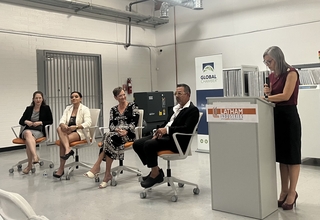
Recently I spoke at the Global Chamber FDI Forum and shared my thoughts about opportunities in Cuba including business and real estate investment. Cuba's economic environment is influenced by domestic reforms, U.S. sanctions, international geopolitics, and limited public data transparency. A diversified research approach essential to determine the best course of action.
Watch the video HERE.
A Balanced View of Cuba
The most effective strategy is to combine insights from official Cuban institutions, multilateral organizations, legal experts, independent media, and investment research platforms.
Key government and investment resources include the Mariel Special Development Zone (ZED Mariel), Cuba's flagship special economic zone designed to attract export-oriented foreign investment, along with the Ministry of Foreign Trade and Foreign Investment (MINCEX), the Ministry of Foreign Affairs (MINREX), and the National Office of Statistics and Information (ONEI).
Understanding the regulatory landscape is equally important. Investors should closely monitor guidance from the U.S. Department of the Treasury's Office of Foreign Assets Control (OFAC), the U.S. Department of State, Congressional Research Service reports, and the Helms-Burton Claims Database to assess sanctions exposure, compliance obligations, and property-related risks.
Leveraging Global Institutions and Independent Research
Organizations such as UNCTAD, UNDP, ECLAC, and the World Bank provide valuable insights into investment policy, economic indicators, sustainability initiatives, and regional development trends.
International media outlets including Reuters, Financial Times, Bloomberg, and The Economist offer timely reporting on sanctions developments, economic reforms, investment activity, and geopolitical changes.
Academic institutions and think tanks also contribute critical perspectives. Resources such as Horizonte Cubano at Columbia University, Stanford University Center for Latin American Studies, Brookings Institution, and Real Instituto Elcano provide analysis on economic reform, migration, governance, and international relations.
Independent Cuban-focused organizations including elTOQUE, OnCuba News, and the Cuba Capacity Building Project deliver valuable on-the-ground reporting and practical insights into current business conditions.
Indicators Worth Monitoring
For those tracking opportunities and risks in Cuba, several indicators merit ongoing attention:
- OFAC announcements and sanctions updates
- Helms-Burton developments
- State Sponsor of Terrorism designation status
- Foreign direct investment approvals
- Tourism performance
- Energy supply reliability
- Currency reforms and exchange rates
- Migration trends
- Activities involving GAESA, which influences a substantial portion of Cuba's economy
By combining official sources, multilateral data, independent journalism, legal analysis, and market intelligence, stakeholders can gain a more comprehensive understanding of Cuba's evolving investment environment.
For additional information, please contact me at john.bord@guevavi.com and connect via LinkedIn: https://www.linkedin.com/in/johnbord/
Originally published at https://www.globalchamber.org/blog/2026/07/06/global-chamber/cuba-s-investment-landscape-and-opportunities/